Tag: Move-Out Cleaning

  • Your Cleaner Isn’t Your Restoration Crew: Protect Your Home During Repairs and Painting

    Your Cleaner Isn’t Your Restoration Crew: Protect Your Home During Repairs and Painting

    When you’re preparing a home for sale, moving into a new property, or finishing renovations, professional cleaning is often one of the last steps.

    The painters are finished. Repairs are complete. Contractors have packed up their tools. Now it’s time for the cleaners to come in and make everything shine.

    But there is an important distinction homeowners should understand before cleaning day arrives:

    Cleaning and restoration are not the same service.

    A professional cleaner can remove dirt, dust, grease, grime, ordinary buildup, and many of the messes that accumulate during everyday living. What cleaners cannot reasonably be expected to do as part of a standard cleaning service is repair damage or remove materials that require scraping, solvents, specialized chemicals, refinishing, or restoration techniques.

    Understanding that distinction can protect your home, your contractors, and your cleaning company from an expensive misunderstanding.

    What Professional Cleaning Is Designed to Handle

    A deep cleaning or move-in/move-out cleaning may include tasks such as:

    • Removing dust, dirt, grease, and grime
    • Cleaning bathrooms and removing ordinary soap scum and buildup
    • Cleaning kitchens and appliances included in the service
    • Wiping cabinets, doors, trim, baseboards, and other surfaces
    • Cleaning floors using products appropriate for the flooring material
    • Cleaning interior window glass, sills, and accessible tracks when included
    • Removing dust and ordinary debris from accessible surfaces
    • Cleaning high-touch areas such as switches, handles, and doors

    The exact scope will vary depending on the property and the cleaning service you’ve purchased, but these tasks have something important in common:

    They involve cleaning the surface, not repairing or restoring it.

    When Cleaning Becomes Something Else

    Imagine you’ve recently had your living room painted.

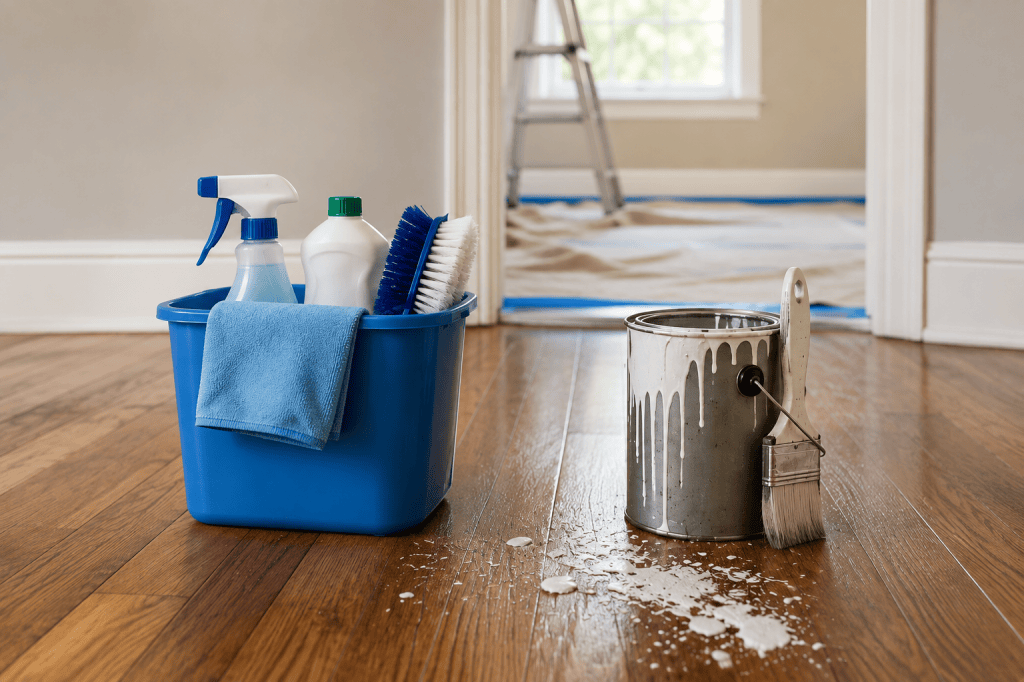
    The walls look beautiful, but several drops of dried paint are now stuck to your hardwood floor.

    Your cleaner arrives for the final deep cleaning.

    If those spots safely come away during ordinary cleaning, wonderful. But what happens if they don’t?

    Removing dried paint might require scraping, solvents, specialized products, or other methods that could potentially damage the finish underneath.

    At that point, the question is no longer simply:

    “Can this be cleaned?”

    It becomes:

    “How can this material be removed without damaging the surface beneath it?”

    That’s a different job.

    The same principle can apply to adhesive, caulk, construction materials, permanent staining, scratches, damaged finishes, and other conditions that ordinary cleaning cannot safely correct.

    Your Contractors Should Be Protecting Your Property

    This is where prevention becomes extremely important.

    If you’re hiring painters, handymen, flooring contractors, or other professionals to work inside your home, ask before the work begins how they plan to protect your finished surfaces.

    Hardwood floors may need appropriate protective coverings. Countertops, cabinetry, fixtures, appliances, and other surfaces may also need protection depending on the work being performed.

    Don’t assume that any mess left behind can simply be handed over to the cleaning company afterward.

    A cleaner should not have to risk damaging your hardwood floor while trying to remove paint that could have been prevented from reaching the floor in the first place.

    And as the homeowner, you don’t want that risk either.

    If an aggressive removal method damages a floor finish, countertop, cabinet, or fixture, what started as a small cleanup problem can become a much more expensive repair.

    Inspect Contractor Work Before the Cleaner Arrives

    When repair, renovation, or painting work is complete, take a few minutes to inspect the property before scheduling the final cleaning.

    Look at the floors. Check countertops and cabinetry. Examine fixtures and other finished surfaces near the work areas.

    If you find dried paint, adhesive, construction material, scratches, damaged finishes, or other problems resulting from the work, address them with the appropriate contractor before your cleaning appointment whenever possible.

    Your cleaner should be responsible for the cleaning.

    Your painter should be responsible for the painting.

    Your contractor should be responsible for the contract work.

    Keeping those responsibilities clear protects everyone involved.

    Specialized Removal and Restoration Are Different Services

    Some cleaning companies may offer specialized removal or restoration services in addition to ordinary cleaning. When they do, those services may require additional equipment, products, expertise, time, and liability considerations.

    That means they should also be quoted and priced separately.

    A standard cleaning estimate should not automatically be interpreted to include restoration simply because a substance happens to be sitting on a surface that needs cleaning.

    At Gerhardy Cleaning Services, our approach is straightforward:

    If something can be safely removed through normal cleaning methods appropriate for the surface, we’ll clean it as part of the agreed cleaning scope. If it requires scraping, specialized chemical removal, repair, refinishing, or restoration techniques, it falls outside the scope of standard cleaning.

    We would rather tell a customer that upfront than risk damaging something valuable by attempting work that belongs to another trade.

    A Better Final Step for Your Property

    Professional cleaning can make an enormous difference when you’re preparing a property for sale, moving out, moving in, or simply giving your home a fresh start.

    But the best results happen when every professional involved does their part.

    Protect your surfaces before repairs and painting begin. Hold contractors responsible for properly protecting the areas surrounding their work. Address damage and construction-related residue before the final cleaning whenever possible.

    Then let your cleaning professionals do what they do best:

    Remove the dirt, dust, grease, grime, and buildup so your home can look its best.

    Clear expectations protect the homeowner, protect the cleaning company, and make it much easier for everyone to be happy with the finished result.
  • Moving Out? How to Clean Your Apartment and Avoid Cleaning Charges

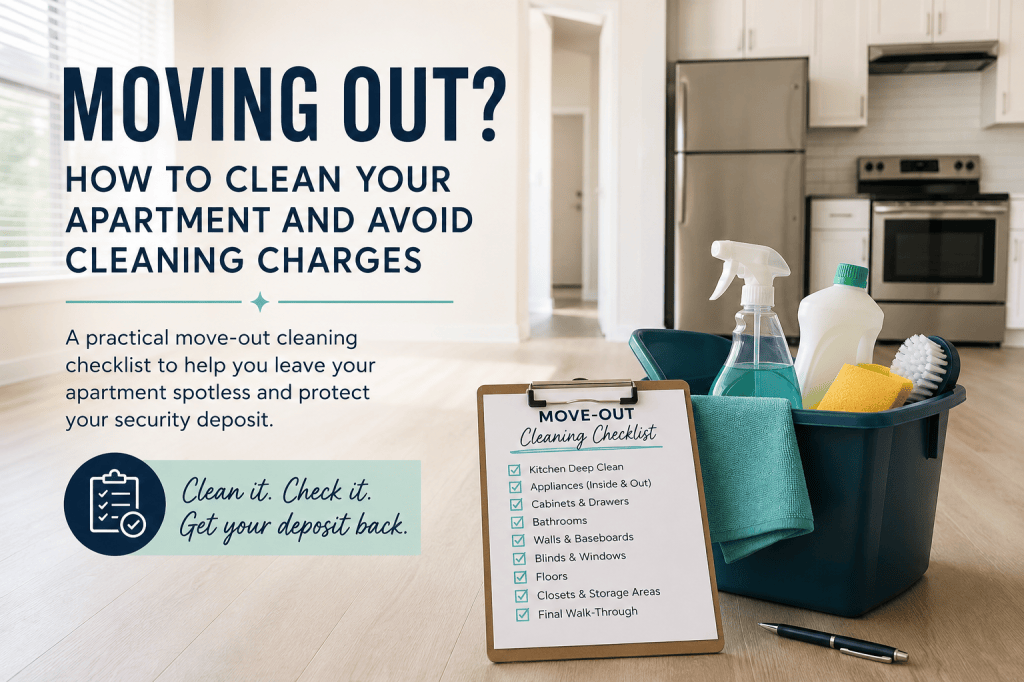
    Moving Out? How to Clean Your Apartment and Avoid Cleaning Charges

    Moving is already a lot of work. You’re packing boxes, changing addresses, moving furniture, turning off utilities, and trying to remember where you put the tape you were holding thirty seconds ago.

    Then there’s the empty apartment waiting to be cleaned.

    When I rented, I always had one rule when I moved out: I wanted to leave the apartment better than I got it.

    That mindset served me well. I’ve received my security deposit back even after living in an apartment for seven years.

    Normal wear and tear is one thing. Dirt is another.

    If you want to avoid unnecessary cleaning charges when you move out, don’t think of your final cleaning as regular housekeeping. Think of it as a reset.

    Start With an Empty Apartment

    If possible, get your belongings out before doing the final deep clean.

    Furniture and boxes hide an amazing amount of dirt. Once everything is gone, you’ll notice dusty baseboards, marks on walls, crumbs in corners, and areas underneath furniture that haven’t seen daylight since you moved in.

    Now you can actually see what needs attention.

    Pull Out the Refrigerator and Stove

    This is one of those areas people forget.

    Clean the inside of the refrigerator thoroughly. Remove food, wipe the shelves and drawers, clean the door and seals, and make sure there aren’t crumbs or spills hiding in corners.

    If the appliance can be moved safely, look underneath and behind it.

    Do the same with the stove. Clean the stovetop, oven, racks, drawer, sides, and the floor underneath and behind it when safely accessible.

    You may discover evidence of meals you don’t even remember eating.

    Clean Inside the Cabinets

    Don’t just wipe the cabinet doors.

    Empty every cabinet and drawer, remove crumbs and debris, and wipe down the interiors. Then clean the doors, handles, and exterior surfaces.

    The kitchen should look ready for another person to unpack their dishes and groceries.

    Look at Your Walls

    I’m not talking about repainting normal wear and tear.

    I’m talking about dirt.

    Look around light switches and doorways. Check for fingerprints, food splashes, scuffs, makeup, and other marks that can be safely cleaned from the painted surface.

    When you’ve lived somewhere for a while, you stop noticing these things. An empty apartment makes them much easier to see.

    Don’t Forget the Blinds and Windows

    Dust your blinds thoroughly.

    Clean the interior glass, window sills, frames, and tracks where accessible.

    Windows and blinds are easy to ignore during everyday cleaning, which means they can accumulate quite a bit over a long tenancy.

    Give the Bathroom a Real Deep Clean

    Clean and sanitize the toilet, tub, shower, sink, vanity, mirrors, fixtures, cabinets, floors, and baseboards.

    Pay particular attention to soap scum, hair, residue, and buildup around fixtures.

    Check behind the toilet and around the base, too.

    Clean the Details

    Once the major areas are finished, start looking at the things that are easy to miss:

    ● Baseboards

    ● Doors and door frames

    ● Light switches

    ● Handles

    ● Closet shelves

    ● Closet floors

    ● Corners

    ● Cabinet handles

    ● Window tracks

    ● Areas where furniture used to sit

    Those little details are often what separate “I cleaned” from “this apartment is clean.”

    Vacuum and Mop Last

    Save the floors for the end.

    Vacuum carpeting carefully, including corners and edges. Sweep and mop hard flooring using products appropriate for the surface.

    Doing the floors last prevents you from dropping dust and debris onto something you just cleaned.

    Do One Final Walk-Through

    When you’re finished, walk through the apartment again.

    Open the refrigerator.

    Open the cabinets.

    Check the closets.

    Look at the baseboards.

    Stand in the doorway of each room and look around as though you were seeing the apartment for the first time.

    My personal test has always been simple:

    Would I be happy receiving the apartment in this condition?

    If the answer is yes, you’re probably finished.

    Take Pictures Before You Leave

    Before returning your keys, photograph the clean apartment.

    Take pictures of each room, the floors, kitchen, appliances, bathroom, and other important areas. A quick video walk-through isn’t a bad idea either.

    You’ll have your own record of the condition in which you left the property.

    Cleanliness Is the Part You Can Control

    You can’t stop normal wear and tear from happening. That’s part of living somewhere.

    What you can control is whether you’re leaving behind grease, crumbs, dirty appliances, dusty blinds, grimy bathrooms, stained surfaces, or floors that haven’t been properly cleaned.

    A move-out clean isn’t about making a seven-year-old apartment magically seven years younger.

    It’s about leaving it clean.

    And if you’re already exhausted from moving and reading this list made you think, Absolutely not, that’s understandable too.

    That’s why professional move-out cleaning exists.

  • Apartment Turnover Cleaning: What Should Be Done Before the Next Tenant Moves In?

    Apartment Turnover Cleaning: What Should Be Done Before the Next Tenant Moves In?

    Apartment Turnover Cleaning: What Should Be Done Before the Next Tenant Moves In?

    When one tenant moves out and another is getting ready to move in, the apartment needs more than a quick tidy-up.

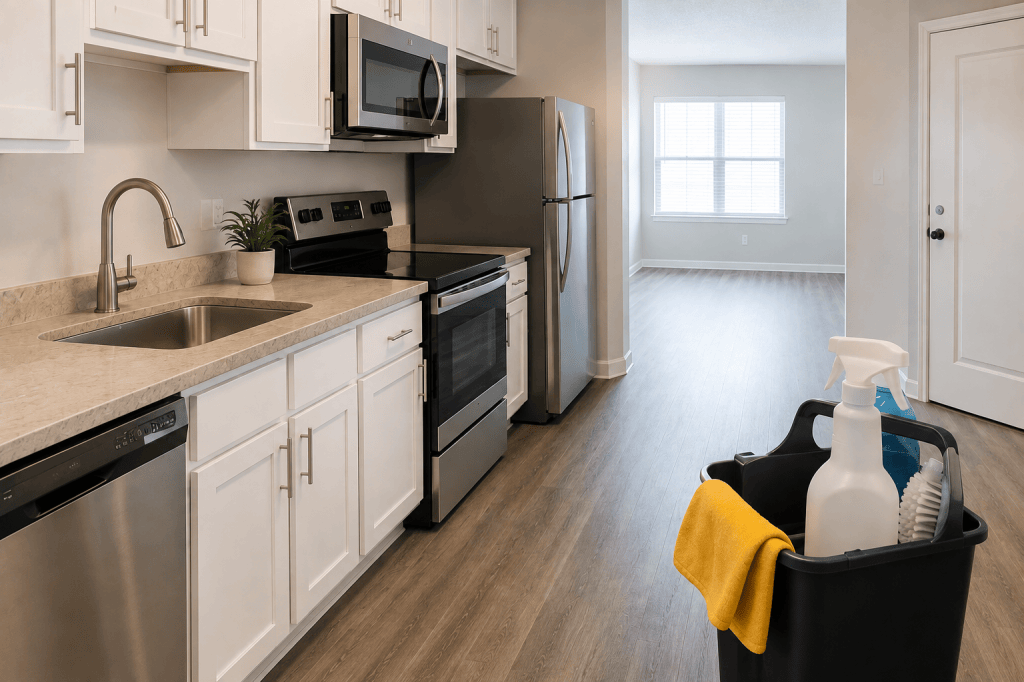
    Turnover cleaning is about preparing a vacant unit so the next resident walks into a space that feels fresh, clean, and ready for move-in. It is different from routine housekeeping because the cleaner has access to areas that are usually blocked by furniture, belongings, and everyday clutter.

    For landlords and property managers, a good turnover clean helps create a better first impression and makes the transition between tenants much smoother.

    Make Sure Maintenance Is Finished First

    Before turnover cleaning begins, repairs and maintenance should already be completed and the apartment should be safe and ready for standard cleaning.

    Turnover cleaning is intended for ordinary dirt, dust, grease, bathroom buildup, residue, and other signs of normal occupancy. It is not the same as post-construction cleaning or cleanup involving renovation debris or hazardous materials.

    Once the unit is ready for regular cleaning, the cleaner can focus on preparing the space for the next resident.

    Clean Inside Cabinets and Drawers

    One of the biggest advantages of cleaning an empty apartment is having access to areas that are normally difficult to reach.

    Kitchen cabinets and drawers should be wiped inside and out to remove crumbs, dust, grease, and residue. Bathroom vanities and other storage areas should receive the same attention.

    A new tenant should not be finding traces of the previous resident when they begin unpacking.

    Give the Kitchen Extra Attention

    Kitchens often require some of the most detailed work during a turnover clean.

    Depending on the condition of the unit, this may include:

    ● Wiping countertops and backsplashes

    ● Cleaning sinks and fixtures

    ● Removing ordinary grease and buildup from stovetops

    ● Cleaning appliance exteriors and accessible interior surfaces

    ● Wiping cabinet doors, shelves, and drawers

    ● Cleaning baseboards and trim

    ● Wiping light switches and other frequently touched surfaces

    ● Cleaning floors thoroughly

    Even an empty kitchen can hold onto grease, crumbs, and residue in places that are easy to overlook.

    Thoroughly Clean the Bathroom

    Bathrooms are another area where incoming tenants tend to notice cleanliness immediately.

    Toilets, sinks, tubs, showers, mirrors, vanities, fixtures, and floors should all be thoroughly cleaned. Hair, soap scum, water spots, dust, and normal bathroom buildup should be removed as much as possible.

    The small details matter. A bathroom can look clean from the doorway while still having buildup around fixtures, along edges, or in corners.

    Pay Attention to Baseboards, Doors, and Trim

    These areas often get overlooked during routine cleaning because furniture and belongings can hide them.

    In a vacant unit, baseboards, doors, doorframes, windowsills, trim, light switches, and other frequently touched surfaces are much easier to access.

    Cleaning these details helps the apartment look more polished and move-in ready.

    Don’t Forget the Floors

    After the rest of the apartment has been cleaned, the floors should receive their final attention.

    Hard flooring may need vacuuming or sweeping followed by mopping. Carpeted areas should be vacuumed thoroughly.

    If the property requires professional carpet extraction or another specialized floor service, that may need to be handled separately depending on the property’s turnover process.

    Do a Final Walkthrough

    Before the apartment is considered ready, it helps to look at the space from the perspective of the incoming tenant.

    Check cabinet interiors, bathroom fixtures, baseboards, windowsills, appliance surfaces, corners, and floors. A final walkthrough can catch small details that are easy to miss during the cleaning process.

    A Clean Apartment Creates a Better First Impression

    The condition of a rental at move-in can set the tone for the tenant’s experience.

    For landlords and property managers, a thoroughly cleaned unit helps show that the property is being cared for and gives the new resident a clean starting point.

    Gerhardy Cleaning Services provides apartment turnover cleaning, move-in/move-out cleaning, deep cleaning, and maintenance cleaning throughout Baltimore City and Baltimore County.

    If you manage rental properties and need dependable cleaning support between tenants, contact Gerhardy Cleaning Services to discuss your property’s needs.

  • When the Kitchen Needs Extra Attention: A Baltimore Apartment Deep Clean

    When the Kitchen Needs Extra Attention: A Baltimore Apartment Deep Clean

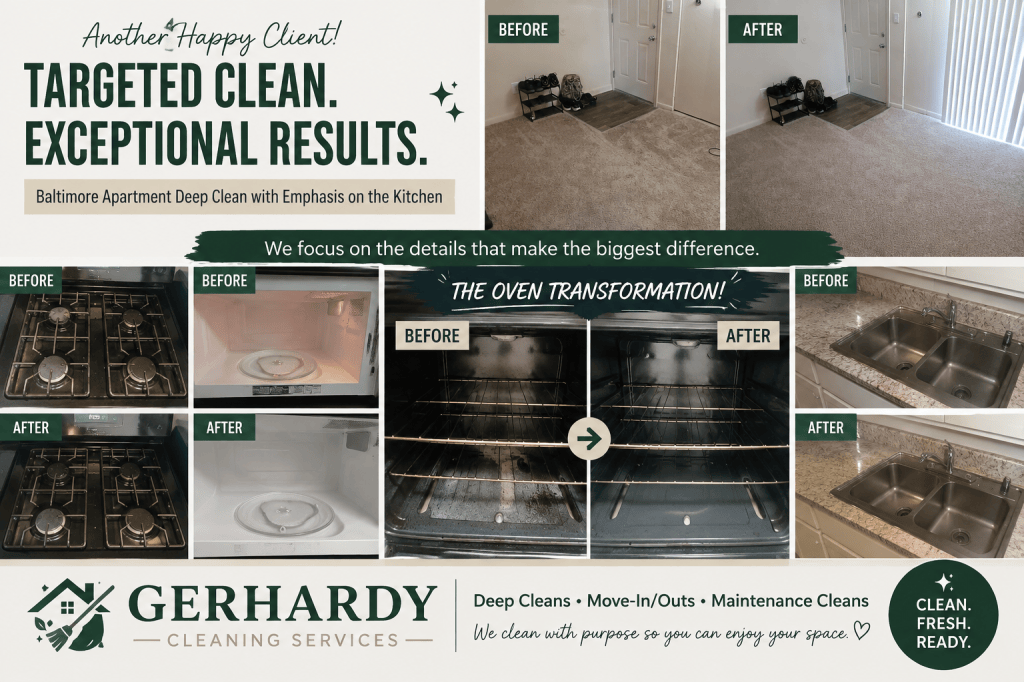
    Every cleaning job is a little different, and sometimes a client knows exactly where they want the extra attention. For this recent Baltimore-area apartment cleaning, the kitchen was the priority.

    We focused on the areas where grease, food residue, and everyday buildup tend to accumulate, including the stovetop, microwave, and especially the oven. The oven needed more than a quick wipe-down, so we gave it the detailed attention necessary to remove built-up residue and leave the interior looking significantly cleaner and refreshed.

    While the kitchen received the most detailed work, we also cleaned and refreshed the surrounding living areas, helping the apartment feel cleaner, brighter, and more put together overall.

    At Gerhardy Cleaning Services, we don’t believe every home needs exactly the same cleaning checklist. Some clients need an entire home deep cleaned. Others have specific areas that need more attention. We assess the condition of the space and focus the work where it will make the biggest difference.

    Read our client’s review on yelp —>