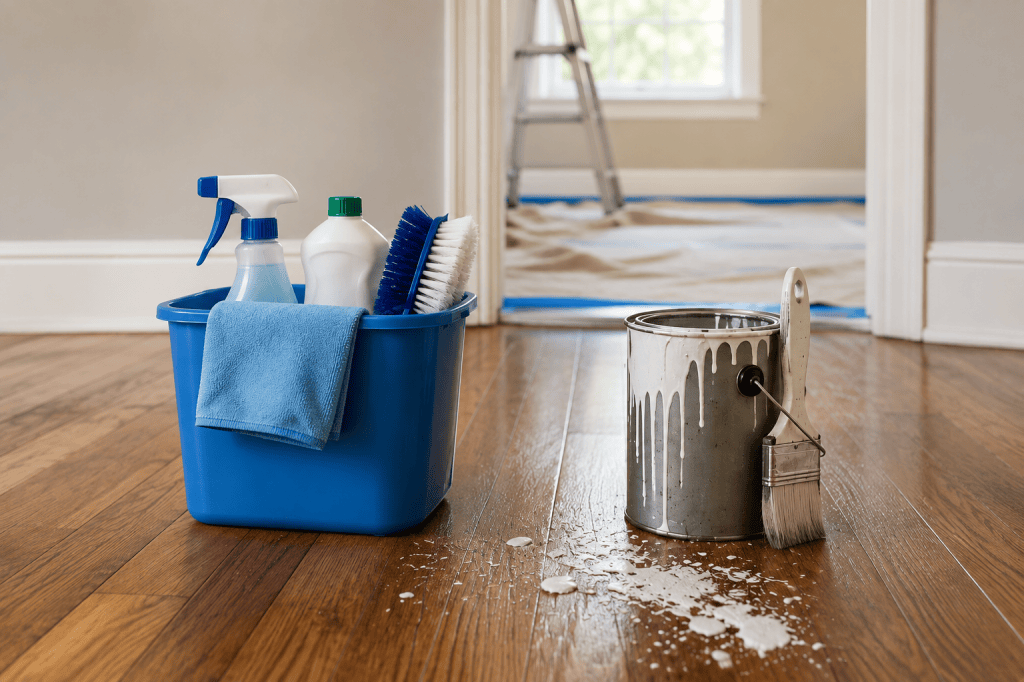
When you’re preparing a home for sale, moving into a new property, or finishing renovations, professional cleaning is often one of the last steps.
The painters are finished. Repairs are complete. Contractors have packed up their tools. Now it’s time for the cleaners to come in and make everything shine.
But there is an important distinction homeowners should understand before cleaning day arrives:
Cleaning and restoration are not the same service.
A professional cleaner can remove dirt, dust, grease, grime, ordinary buildup, and many of the messes that accumulate during everyday living. What cleaners cannot reasonably be expected to do as part of a standard cleaning service is repair damage or remove materials that require scraping, solvents, specialized chemicals, refinishing, or restoration techniques.
Understanding that distinction can protect your home, your contractors, and your cleaning company from an expensive misunderstanding.
What Professional Cleaning Is Designed to Handle
A deep cleaning or move-in/move-out cleaning may include tasks such as:
- Removing dust, dirt, grease, and grime
- Cleaning bathrooms and removing ordinary soap scum and buildup
- Cleaning kitchens and appliances included in the service
- Wiping cabinets, doors, trim, baseboards, and other surfaces
- Cleaning floors using products appropriate for the flooring material
- Cleaning interior window glass, sills, and accessible tracks when included
- Removing dust and ordinary debris from accessible surfaces
- Cleaning high-touch areas such as switches, handles, and doors
The exact scope will vary depending on the property and the cleaning service you’ve purchased, but these tasks have something important in common:
They involve cleaning the surface, not repairing or restoring it.
When Cleaning Becomes Something Else
Imagine you’ve recently had your living room painted.
The walls look beautiful, but several drops of dried paint are now stuck to your hardwood floor.
Your cleaner arrives for the final deep cleaning.
If those spots safely come away during ordinary cleaning, wonderful. But what happens if they don’t?
Removing dried paint might require scraping, solvents, specialized products, or other methods that could potentially damage the finish underneath.
At that point, the question is no longer simply:
“Can this be cleaned?”
It becomes:
“How can this material be removed without damaging the surface beneath it?”
That’s a different job.
The same principle can apply to adhesive, caulk, construction materials, permanent staining, scratches, damaged finishes, and other conditions that ordinary cleaning cannot safely correct.
Your Contractors Should Be Protecting Your Property
This is where prevention becomes extremely important.
If you’re hiring painters, handymen, flooring contractors, or other professionals to work inside your home, ask before the work begins how they plan to protect your finished surfaces.
Hardwood floors may need appropriate protective coverings. Countertops, cabinetry, fixtures, appliances, and other surfaces may also need protection depending on the work being performed.
Don’t assume that any mess left behind can simply be handed over to the cleaning company afterward.
A cleaner should not have to risk damaging your hardwood floor while trying to remove paint that could have been prevented from reaching the floor in the first place.
And as the homeowner, you don’t want that risk either.
If an aggressive removal method damages a floor finish, countertop, cabinet, or fixture, what started as a small cleanup problem can become a much more expensive repair.
Inspect Contractor Work Before the Cleaner Arrives
When repair, renovation, or painting work is complete, take a few minutes to inspect the property before scheduling the final cleaning.
Look at the floors. Check countertops and cabinetry. Examine fixtures and other finished surfaces near the work areas.
If you find dried paint, adhesive, construction material, scratches, damaged finishes, or other problems resulting from the work, address them with the appropriate contractor before your cleaning appointment whenever possible.
Your cleaner should be responsible for the cleaning.
Your painter should be responsible for the painting.
Your contractor should be responsible for the contract work.
Keeping those responsibilities clear protects everyone involved.
Specialized Removal and Restoration Are Different Services
Some cleaning companies may offer specialized removal or restoration services in addition to ordinary cleaning. When they do, those services may require additional equipment, products, expertise, time, and liability considerations.
That means they should also be quoted and priced separately.
A standard cleaning estimate should not automatically be interpreted to include restoration simply because a substance happens to be sitting on a surface that needs cleaning.
At Gerhardy Cleaning Services, our approach is straightforward:
If something can be safely removed through normal cleaning methods appropriate for the surface, we’ll clean it as part of the agreed cleaning scope. If it requires scraping, specialized chemical removal, repair, refinishing, or restoration techniques, it falls outside the scope of standard cleaning.
We would rather tell a customer that upfront than risk damaging something valuable by attempting work that belongs to another trade.
A Better Final Step for Your Property
Professional cleaning can make an enormous difference when you’re preparing a property for sale, moving out, moving in, or simply giving your home a fresh start.
But the best results happen when every professional involved does their part.
Protect your surfaces before repairs and painting begin. Hold contractors responsible for properly protecting the areas surrounding their work. Address damage and construction-related residue before the final cleaning whenever possible.
Then let your cleaning professionals do what they do best:
Remove the dirt, dust, grease, grime, and buildup so your home can look its best.
Clear expectations protect the homeowner, protect the cleaning company, and make it much easier for everyone to be happy with the finished result.
 Gerhardy Cleaning Services